

Sales development drives business growth by creating pipelines of qualified opportunities that close into revenue. However, not all sales development looks the same. Two distinct roles have emerged to handle different aspects of the prospecting process: Sales Development Representatives (SDRs) and Business Development Representatives (BDRs). While these titles sometimes get used interchangeably, they represent different functions with unique focuses and responsibilities.
Understanding the SDR vs BDR difference is important for building an effective sales organization. Choosing the wrong structure can result in misaligned activities, wasted resources, and missed opportunities. Some businesses need SDRs, others require BDRs, and many benefit from having both roles working in coordination. The right choice depends on your sales model, target market, and growth strategy.
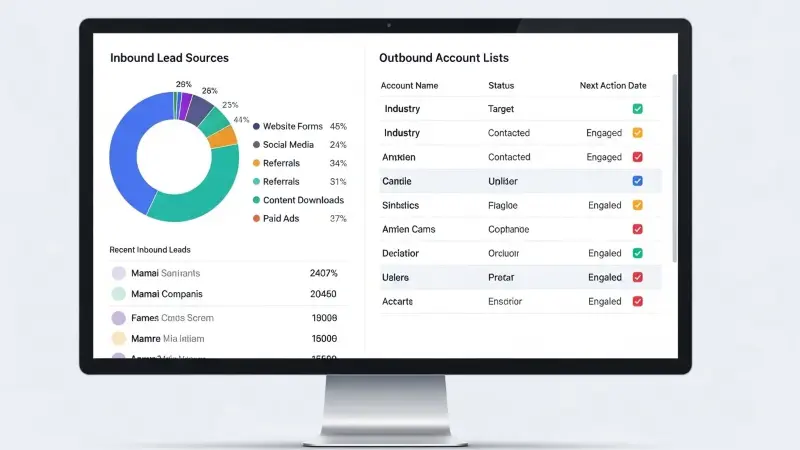
Sales Development Representatives typically handle inbound leads—prospects who have already shown interest in your product or service by downloading content, requesting demos, attending webinars, or engaging with marketing materials. SDRs respond to these warm leads quickly, qualify their interest and fit, and schedule meetings with appropriate sales team members.
Business Development Representatives, in contrast, focus on outbound prospecting. They identify potential customers who fit your ideal customer profile but haven’t yet engaged with your company. BDRs conduct research, create targeted outreach campaigns, and initiate conversations with prospects who may not be actively looking for solutions.
In the sales funnel, SDRs typically operate at the middle stages where prospects have awareness and interest but need qualification before engaging with sales. Their job is to determine whether inbound leads are legitimate opportunities worth pursuing and moving qualified prospects forward quickly.
BDRs operate at the top of the funnel, creating awareness and generating initial interest among prospects who may not know your company exists. They introduce your solution, educate prospects about problems they might not realize they have, and nurture relationships over longer periods before prospects are ready for sales conversations.
When examining SDR vs BDR roles in the sales process, think of SDRs as accelerators of existing interest and BDRs as creators of new interest.
SDRs generally work with broader audiences across various company sizes and industries because inbound marketing casts wide nets. Their qualification process involves determining which of many inbound leads represent the best opportunities based on budget, authority, need, and timeline.
BDRs typically focus on specific target accounts or narrow segments. They might exclusively pursue enterprise companies in particular industries, specific geographic regions, or accounts using competing solutions. This focused approach allows BDRs to develop deep knowledge about their target audience and craft highly personalized outreach.
Performance metrics differ between these roles based on their distinct objectives. Common SDR metrics include:
BDR metrics focus on outbound activity and relationship building:
Understanding the difference between SDR and BDR in terms of measurement helps set appropriate expectations and compensation structures for each role.

SDRs make sense when you have a consistent inbound lead flow that needs rapid response and qualification. If your marketing generates significant interest through content, advertising, events, or other channels, SDRs ensure those leads receive timely attention and qualified prospects move quickly to sales conversations.
Companies with product-led growth models, where prospects try software before buying, often benefit from SDRs who can engage users showing purchase intent signals. Similarly, businesses with lower price points that attract high volumes of inbound interest need SDRs to efficiently qualify and route opportunities.
If your challenge is maximizing conversion from existing interest rather than generating initial awareness, prioritize SDRs.
BDRs are valuable when targeting specific accounts or markets that won’t discover you through inbound channels. Enterprise sales targeting Fortune 500 companies requires outbound prospecting because these organizations don’t typically find vendors through Google searches or downloaded ebooks.
If you’re entering new markets, launching new products to different audiences, or pursuing accounts using competitor solutions, BDRs create the initial conversations that inbound marketing alone won’t generate. Their focused research and personalized outreach reach decision-makers who need education about why they should consider your solution.
Companies with longer sales cycles and higher deal values typically invest in BDRs because the effort required for outbound prospecting justifies the potential return.
Many organizations benefit from both roles working in tandem. The SDR vs BDR decision isn’t always either/or—it can be both/and when your go-to-market strategy includes multiple channels and target segments.
A common hybrid structure has BDRs focusing on strategic target accounts while SDRs handle inbound leads from marketing campaigns. This approach ensures both proactive account targeting and reactive lead management happen simultaneously.
Another hybrid model assigns SDRs to respond to all inbound interest while BDRs conduct outbound outreach to accounts that haven’t yet engaged. Once BDRs generate initial interest and accounts enter the inbound flow, SDRs take over qualification and meeting scheduling.

Effective SDRs excel at rapid qualification. They quickly assess whether leads meet basic criteria, ask probing questions to understand needs, and determine appropriate next steps. Speed matters because inbound leads who wait for responses often lose interest or engage with competitors.
SDRs need strong listening skills to understand prospect situations during brief conversations. They must efficiently gather information, match prospect needs to solution capabilities, and articulate value propositions that resonate with diverse audiences.
Organizational skills help SDRs manage high volumes of leads, prioritize follow-ups, and maintain detailed records in CRM systems. They operate in fast-paced environments where many conversations happen daily.
BDRs require strong research abilities to identify ideal prospects, understand their business challenges, and find relevant talking points. They spend significant time learning about target accounts before making contact, researching industries, studying company priorities, and identifying appropriate contacts.
Persistence and resilience matter enormously for BDRs because outbound prospecting involves significant rejection. Most cold outreach doesn’t generate responses, and many conversations don’t result in immediate opportunities. BDRs must maintain motivation despite frequent “no” responses.
In hybrid sales teams, clear processes prevent confusion about ownership. Typically, BDRs own outbound prospecting to target accounts until those accounts show inbound interest by responding to campaigns, visiting websites, or downloading content. At that point, accounts might transfer to SDRs for continued qualification and meeting scheduling.
The handoff requires documentation of all previous outreach, conversation history, and known prospect interests. This continuity ensures prospects don’t receive conflicting messages or redundant outreach from multiple team members.
Some organizations structure SDR vs BDR collaboration differently, with BDRs retaining ownership of strategic accounts throughout the entire development cycle while SDRs focus exclusively on marketing-generated leads. Either model works if roles and territories are clearly defined.
SDRs and BDRs often share insights that improve overall team performance. BDRs learn from SDRs about which messaging resonates with inbound prospects, helping refine outbound campaigns. SDRs benefit from BDR research about specific industries or accounts, enhancing their qualification conversations.
Regular team meetings where both roles share successes, challenges, and learnings create a continuous improvement culture. BDRs might share examples of outreach messages that generated responses, while SDRs discuss qualification approaches that efficiently identify high-value opportunities.
Pipeline meetings benefit from both perspectives. BDRs report on outbound pipeline being created, SDRs update on inbound pipeline progression, and sales leadership sees a complete picture of opportunity flow from all sources.